
Routine work runs by itself. People handle the exceptions.
Every step is logged, data is handled carefully and your team can adjust the flow.
Every Friday, the same export. Another reminder about an approval. The same information entered again. We automate that routine and add AI where it helps, with a person deciding where it matters.
Much of the working week is routine: the same steps, the same fields, the same reminders. We automate that work and add AI where it helps. Your team keeps the decisions.
Think of a flight. Automation is the autopilot. It flies the long, repetitive stretches so nobody has to. AI is the co-pilot. It reads, summarises, sorts and suggests: it writes up a call and fills the right fields, sorts incoming mail and documents, prepares next steps or drafts a reply. Your team stays the captain. Exceptions go to a person, a draft is approved before it goes out, every step is logged like a black box, and data is handled carefully. We start with one route, test it with you and hand over the controls.
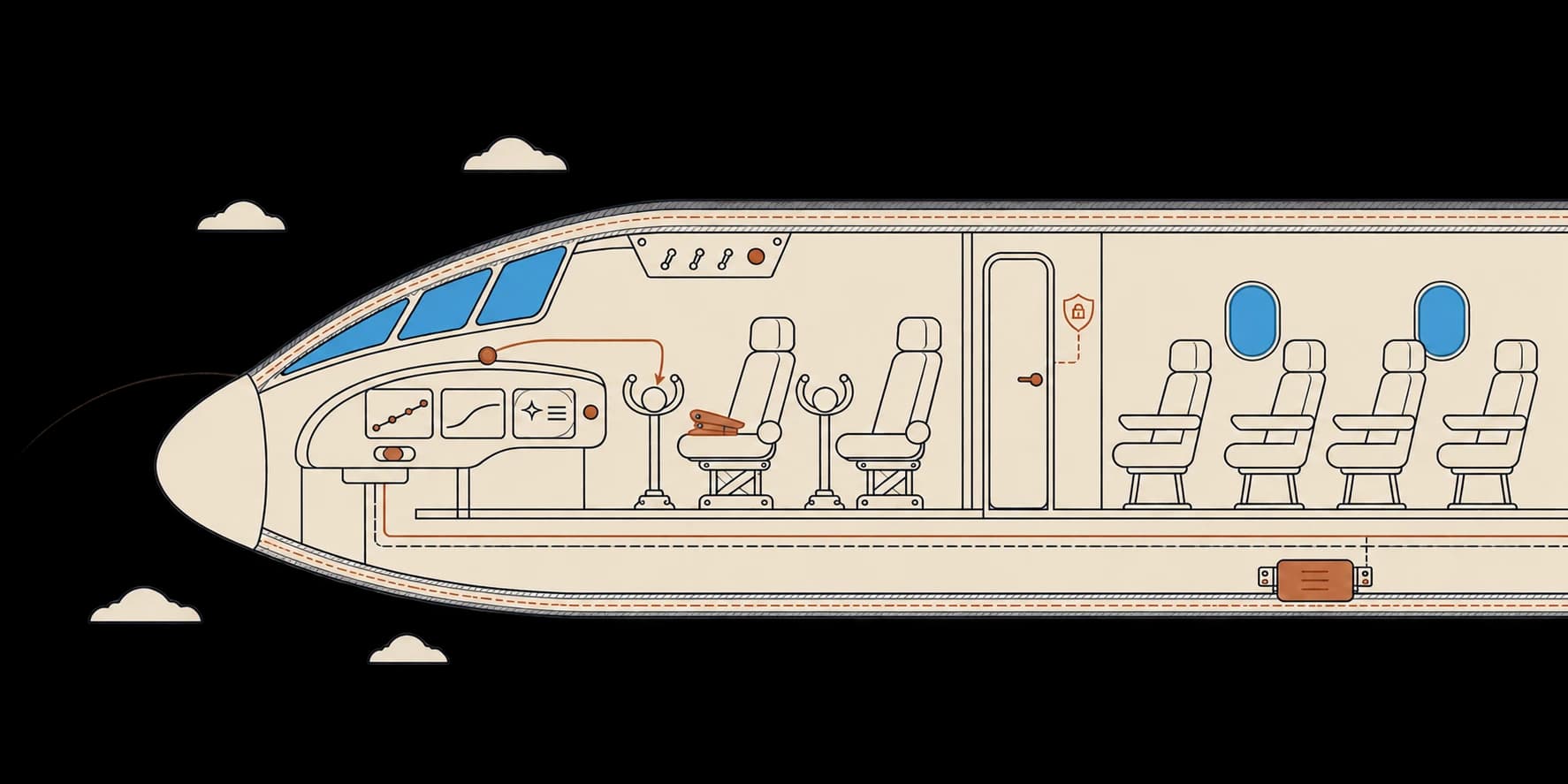
A workable outcome
Every step is logged, data is handled carefully and your team can adjust the flow.
Does this sound familiar?
We look for repeated steps, retyped data and approvals that wait in one inbox.
How we work
We learn the work, build the first flow and hand it over with clear rules.
We sit with the people who do the work and see where the time goes.
We pick one low-risk routine and build it. Something useful in production, not a diagram.
Your team gets documentation, training and the logs, and knows who to ask when something looks odd.

Related case study
An international staffing group with more than a thousand employees across five European countries, and with labels that each work in their own sector, had scattered systems. We are bringing them under one roof: one platform on which every label works its own way, with one shared core underneath. One rule we held to: a placement is only done when the payslip and the invoice are right.
How we choose
We start with the routine, add AI where it helps a person and keep your team in charge.
Let us take a look
Tell us where the work gets stuck and who it affects. We will work out a sensible first step together.